
How to Report a Pothole in Mercia and Track Whether It Actually Gets Fixed
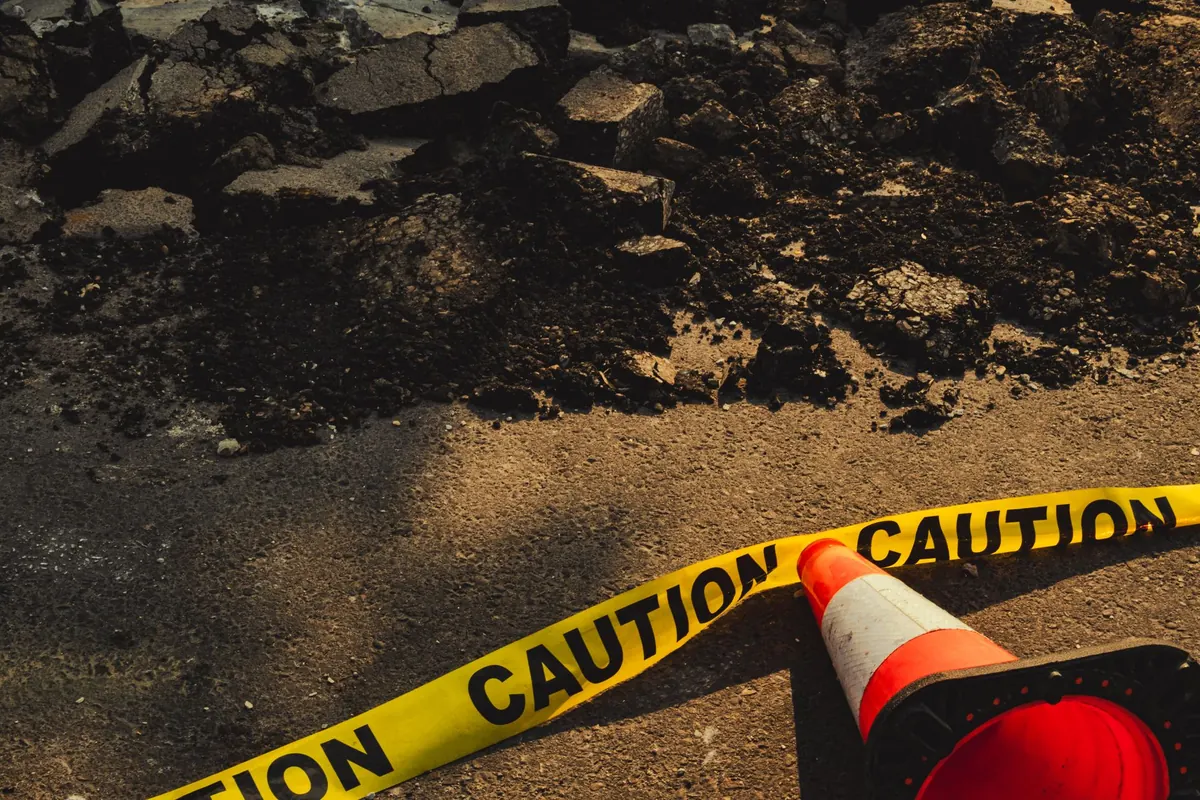
A pothole rarely stays the size it was when you first noticed it. Water gets in, traffic works the edges loose, and within a few weeks a nuisance becomes a hazard. Plenty of people see it every day and never report it. The ones who do often send a one-line message with no landmark, no photo and no way to check what happened next.
That is fixable. Here is how to file a report that gets logged properly, and how to keep an eye on it until someone turns up with a lorry and a shovel.
First, work out who owns the road
This is the step most reports fail at. Residential streets, most town centre roads and rural lanes are usually the local authority's responsibility. Motorways and major trunk roads may belong to a regional or national highways body instead. Private access roads, unadopted lanes, supermarket car parks, business parks and some newer estate roads built by developers can sit outside the council's remit entirely.
If you are not sure, check the council's website. Many publish a map showing which roads they maintain, and most reporting forms will redirect you if you have picked the wrong one. Expect that redirect to cost you a few days, which is why it is worth checking first. If the road is genuinely private, the repair is down to the landowner or the residents who share it, and the council's role is usually limited to advice or enforcement.
Give them the details that decide the repair
A highways team does not treat every defect the same way. It categorises them, and the category depends almost entirely on what you tell them. Include as much of the following as you can:
- Exact position. Road name, nearest house number or junction, direction of travel, which lane, which side of the road. "Outside 42 Bridge Street, eastbound, just past the bus stop" beats "Bridge Street".
- Size and depth. Rough dimensions help. A shallow depression the width of a dinner plate is a different job from a hole deep enough to swallow a wheel.
- Where it sits in the road. Wheel tracks, junctions, bends, crossings, cycle lanes and bus routes all raise the risk level.
- Whether it is deteriorating. Fresh loose material, crumbling edges and standing water all suggest it is getting worse.
- Who it affects. Cyclists swerving into traffic, buses hitting it at every stop, water spraying onto a driveway.
- Any damage already caused. Say so plainly if it has taken out a tyre or caused someone to fall.
Many highway authorities work to an intervention level, meaning a defect has to reach a certain depth before it is scheduled for repair, and that figure is often somewhere in the region of 40mm. Councils publish their own policies, so check yours rather than relying on what a neighbour told you. Whether a hole clears that threshold is exactly why measurements and photographs matter.
Photographing damage so it is actually useful
Take at least two pictures: one wide shot showing the road, kerb and surroundings so the location is obvious, and one close shot of the defect itself. Put something familiar next to the hole for scale, such as a coin, a boot or a tape measure. Do not kneel in a live lane to do it, and do not pose a hand in the road for effect.
Shoot in daylight if you can, because wet tarmac hides depth. Photograph from the pavement or verge. Note the date and time, and if you end up reporting the same spot twice, keep both sets of images. A before-and-after sequence showing a hole getting deeper is hard to argue with.
File the report and keep the reference
The council's online form is usually the fastest route, and most let you drop a pin on a map, which fixes the location better than any description. Phone if the defect is genuinely dangerous, such as a deep hole in an unlit lane or on a fast road, and use the word hazard. Some councils also run apps or share a reporting platform with neighbouring authorities.
Whatever route you use, save the reference number. Screenshot the confirmation email, note the date, and if nobody gives you a reference, ask for one. A report without a reference is nearly impossible to chase.
It also helps to get neighbours involved. Several reports on the same defect, each quoting the same location or reference, carry more weight than one. If the hole has already caused damage, mention it, and if you are considering a claim for repairs or injury, keep your receipts and photographs and take proper advice rather than relying on general guidance like this.
What happens after you press send
The report is logged, and an inspector may visit. The defect is then categorised and scheduled. Some repairs are temporary, such as a cold-lay patch pushed in during winter, and some are permanent, where the damaged section is cut out and re-laid. Both are legitimate, but they have very different lifespans.
Timelines vary enormously between councils and between categories. Most authorities publish target times for dangerous defects and for routine ones, and those figures are worth reading before you start counting days. Weather matters too: permanent surfacing generally waits for drier, warmer conditions.
Patches do fail. A repair that breaks up within a season is not automatically negligence, but it is worth reporting again, quoting the original reference so the history is on record.
How to track the repair
Your reference number is the whole tracking system. Most councils let you check status online, and you can email or call quoting that number. Beyond that, watch for the physical signs of planned work: yellow markings, spray-painted outlines around the defect, cones, or an entry on the council's roadworks list. Not every authority marks up before patching, but many do.
Set a reminder in your calendar rather than trusting your memory. Two to four weeks is a reasonable first check for a routine defect, and sooner if the hole is on a bend, at a junction or on a cycle route. Keep a small log of dates, references and who you spoke to. It takes two minutes and saves you starting from scratch months later.
When the work is done, photograph the finished patch. If it fails, you have the evidence ready.
If nothing happens
Chase it once with the reference in hand, and ask two specific questions: what category the defect was given, and when the repair is scheduled. Vague answers are common, so push for a date.
If that goes nowhere, escalate. Your local councillor or elected representative can raise it directly with the highways team. The council's formal complaints procedure creates a paper trail. Parish and community council meetings are another route, and a residents' group submitting a list of ten reference numbers for one street is considerably harder to ignore than a single email.
If the road turns out not to be the council's, the same chasing applies, just to a different organisation.
Make it a habit, not a rant
The system works when reports stack up. One clear message with a landmark, a photo and a reference is worth more than a dozen complaints on social media. So report it the day you see it, keep the reference somewhere you will find it, and check back in a few weeks. Then mention it to the neighbour whose car parks over it. Potholes get filled in because someone kept the paperwork straight, which is unglamorous but reliably effective.
And one last thing: never measure, photograph or inspect a pothole from the middle of a live carriageway. No repair is worth that.
Photo: Aiden Tieulie / Pexels